Everything You’ve Ever Wanted to Know About Jai Alai Betting
Posted: March 10, 2026
Updated: March 10, 2026
Known as the fastest game in the world thanks to the speed of the ball, Jai Alai was once one of the biggest betting sports in the US. However, with the strength of American Football, Basketball, and Baseball, the game of Jai Alai gradually faded into the past.
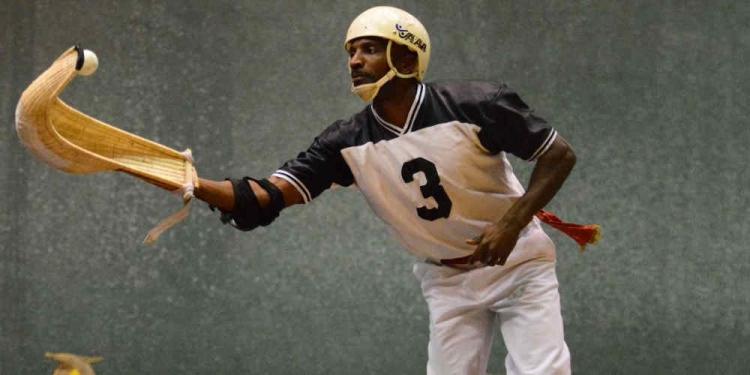
Image source: Lander Eizagirre, CC BY-SA 4.0, via Wikimedia Commons
The Rise and Fall of Jai Alai Betting
If you’re from a certain bygone era, you’ll remember the first time you stepped into a Florida fronton back in the eighties. The noise was unlike any other sport on the planet. You’d hear a sharp crack like a rifle shot every time the ball hits the granite wall. That ball was known as the pelota, and it moves faster than a lucky thought. We watched men strapped into long wicker baskets called “cestas” as they flung that goat-skin ball at speeds that would get you a ticket on the highway. In those days, this new sport felt like the future. Everyone in the stands held a program in one hand and a cold drink in the other. We were all there for one thing. Namely, the thrill of Jai Alai betting in its purest, most chaotic form.
The History from the Pyrenees to the Palm Trees
This ancient game started in the Basque Country of Spain and France many centuries ago. In those days it was a simple village game played against church walls on Sundays. Then, it traveled to Cuba and Mexico with Spanish immigrants before landing in Miami. By the middle of the last century, it had become the height of fashion. It grew from a niche hobby into a massive industry that drew thousands of people every night. Yet it somehow still feels like a secret club that everyone was invited to join. The sport thrived, probably because it offered something different from the usual horse races or card games. Fans loved the speed of play and the international flair of the players.
How the Game of Jai Alai is Played
As for the equipment to believe it, the “pelota” itself is made of Brazilian rubber and hand-wrapped in two layers of goat skin. It’s harder than a rock and more dangerous than a stray bullet. The “cesta” is custom-made from reeds found in the Pyrenees mountains. Players use these curved baskets to catch and hurl the ball in one fluid motion. We’d often marvel at the athleticism required to keep that pace up for an hour. The court, or “fronton”, has three walls made of solid granite to withstand the constant pounding. It was a game of angles and raw power that rewards the braver player.
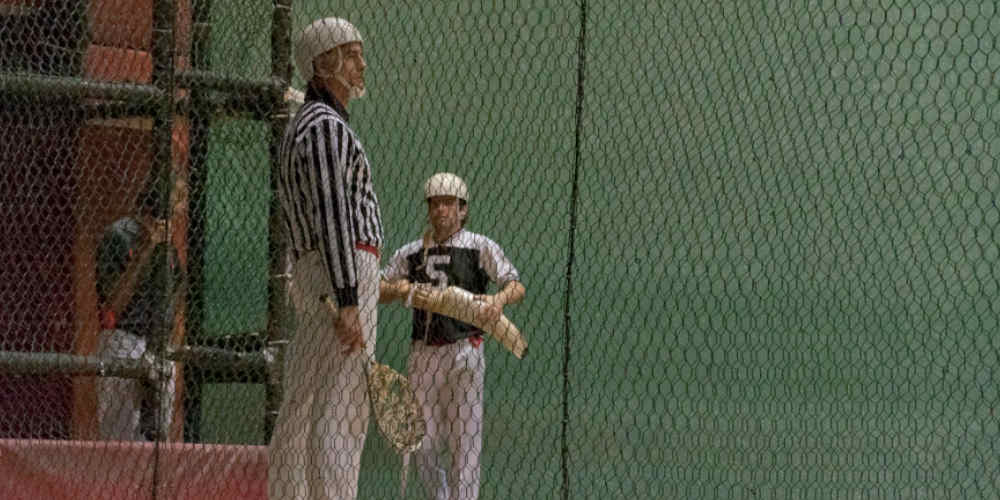
Jai Alai vs Squash
When you look at Jai Alai and squash side-by-side, it’s easy to see why people often can’t tell the difference. They both involve hitting a ball against a wall in a fast-paced environment, but that is where the similarities end.
Here is a breakdown of how these two “wall ball” sports compare in the real world:
- The Equipment: In squash, we use a lightweight carbon-fiber racket and a hollow rubber ball that needs to be “warmed up” to bounce. In Jai Alai, players use a cesta to catch and hurl a pelota, which is a rock-hard ball of rubber and goatskin.
- The Court Layout: Squash is played in a fully enclosed rectangular room with four walls. Jai Alai takes place on a “cancha”, which is much larger and traditionally has only three walls (front, back, and left), leaving the right side open for spectators or a net.
- The Speed: While a professional squash serve can reach about 281 km/h (175 mph), Jai Alai holds the Guinness World Record for speed. A pelota can fly at over 300 km/h (188 mph), making it a significantly more dangerous sport that requires players to wear helmets.
- Hand Dominance: In squash, you can play with either hand. In Jai Alai, all players must use their right hand to hold the cesta. This is a safety rule because the spin of a left-handed throw would be unpredictable and dangerous on a court with an open right side.
- How Points are Won: In squash, we generally play until the ball bounces twice or hits a “tin” (the out-of-bounds area at the bottom of the front wall). In Jai Alai, you get points if an opponent fails to catch the ball in one fluid motion or fails to return it to the front wall before the second bounce.
- The Betting Style: This is the biggest difference for us gamblers. Squash betting is usually “Fixed Odds” (like betting on a tennis match). Traditional Jai Alai uses a pari-mutuel system similar to horse racing, where everyone bets into a pool, though modern “Battle Court” formats are now moving toward the head-to-head style you might see at 1xBET Sportsbook.
Built for the Pari-Mutuel System
Here at Gamingzion, we believe this sport was a perfect match for the gambling window. In short, Jai Alai uses a system where you bet against other fans rather than a bookie. This is the pari-mutuel system so often in use at horse racing events, and it’s there to keep things very fair for the average sports bettor. When we look at Jai Alai betting, we can see a structure that rewards those who study the players’ recent form. There are eight players or teams in a match, and they rotate onto the court in a specific order. This creates a moving target of odds that changes after every single point. As such, it’s a fast-paced way to play that keeps your heart rate high.
The “Spectacular Seven” and Scoring in Jai Alai Betting
The scoring system is a bit of a quirk that newcomers need a bit of time to grasp. In a “Spectacular Seven” game, the first team to reach seven points wins the whole thing. The first round of play usually counts for one point per win. Then, the points double in the second round to keep the drama building. You’ll find that this makes the end of the game much more intense than the beginning. It also means that a player who starts in the back of the line has a huge mountain to climb. Having a good understanding of these rotations is a huge part of Jai Alai betting, especially for anyone starting who’s a sportsbetting newbie.
The Golden Age of Miami’s Wall Street of Wagers
There was once a time when the Miami Fronton was the busiest place in the state. You could see celebrities and high rollers sitting courtside next to regular workers. One reason was that it was the only place you could legally gamble on sports in many parts of the country. The handle, which is the total amount of money bet, was often in the millions of dollars. It was a massive engine of commerce that also funded schools and roads for years. You could walk into a fronton and feel the electricity of a thousand bets hanging in the air. In truth, it was a golden era that felt like it would never end.
The 1988 Strike was the End of Jai Alai Betting
However, everything changed in the late eighties. This is when the players decided to walk off the job. Fans could only look on as a bitter labor dispute dragged on for years and years. In an effort to keep the money rolling in, owners brought in replacement players who were not as good as the Basque pros. Of course, fans quickly noticed the drop in quality almost immediately and started to stay away. Gradually, the trust between the fans and the frontons was broken during that long absence. It was a sad time for the sport because the magic started to fade away. It’s fair to say that this strike was a turning point that led to the decline of Jai Alai betting across the United States.

Vanishing Frontons are the Architecture of Decay
If you drive through Florida today, you can still see the hushed remains of old frontons. Keep in mind that these buildings could hold five thousand screaming fans at a time. Now, many of them sit empty or have been torn down for new condos. It’s hard not to feel a bit of nostalgia when you see the old signs for “The World’s Fastest Game.” It’s expensive to keep these massive granite courts in good shape, and without the big crowds, the math of running a fronton just doesn’t work anymore.
Jai Alai Betting vs. The Modern Sportsbook
Today, we can see a very different world for people who want to place a wager. You can find plenty of options on online sportsbook sites in the US that did not exist a decade ago. These websites offer thousands of games at the touch of a button on your mobile phone. To this end, Jai Alai has to compete with the NFL, the NBA, and global soccer for your attention. It’s a tough battle for a niche sport that most people have never seen in person. But the fast pace of the game actually fits the modern style of live betting. Personally, we still think it has a unique charm that the big popular sports lack.
The Psychology of the Niche Bettor
There is a special kind of person who still follows this sport closely. We like to call them the niche bettors, and they usually love the math behind each game. They know every player’s strengths and which court conditions favor a certain style of play. These are the type of sports bettors who aren’t looking for the big TV games that everyone else is watching. Instead, they find value in the corners of the market where the bookies might be less focused. You can see this same passion at 1xBET Sportsbook when people look for specific games. We believe these bettors enjoy the challenge of knowing more than the average sports fan.
The Rebranding Jai Alai Betting at Magic City
Right now, there is a small glimmer of hope coming out of a place called Magic City. Otherwise known as Miami. They’ve tried to modernize the game by making the court shorter and faster. They have also moved to a head-to-head format that is much easier for new fans to follow. You can see them streaming games on the internet to reach a younger audience. This new version of Jai Alai betting is perfect for the TikTok generation of sports fans. To be honest, it’s a bold experiment to see if the sport can live on in a new form. We’re rooting for them to keep the tradition alive.
Cultural Legacy from Miami Vice to Mad Men
For old-timers, the sport will always have a place in pop culture history. We can even remember seeing it in the opening credits of the hit TV show, Miami Vice, back in the day. It represented the fast life and the danger of the city in the eighties. Even Mad Men had a plot about trying to market the sport to American audiences. The game has a visual style that is instantly recognizable and very cool, along with the white uniforms and the red accents of the court that create a beautiful aesthetic. Even if the actual sport fades, the images of the players on the court will stay with us forever.

The Physics of the Pelota and Jai Alai Betting
One thing we should never forget is how dangerous this game is for the athletes. The pelota is so hard that it can crack a helmet or a bone quite easily. Players have to have incredible reflexes to stay out of the way of a returning shot. This physical danger adds a layer of respect to Jai Alai betting that you don’t get elsewhere. In many ways, you’re wagering on people who are putting their bodies on the line every minute. In reality, it’s a raw and honest display of human skill and courage. And it’s this intensity that kept us coming back to the front for all those years.
Jai Alai Betting – A Relic or a Renaissance?
Like many boomers, we find ourselves wondering what the future holds for this strange and beautiful sport. You can stay a head of the game by reading online gambling news in the US to see if any new courts open. Of course, we might have to accept the fact that the game might never return to the glory days of the seventies. But it also refuses to completely die. There’s still the thrill of a good bet on a fast-moving game. Whether you play at a site like 1xBET Sportsbook or watch a live stream, the spirit remains. We hope that the sound of the cesta never truly goes silent. After all, it’s a piece of our history that’s well worth saving for the next generation.
Click here to bet on Jai Alai at the 1xBET Sportsbook


GAMBLING NEWS IN UNITED STATES


2026-09-11

2026-09-11

2026-09-11

2026-09-11

2026-09-09

2026-09-09
