The Odds, Markets, and Ethics of Betting on the Iran-US War
Posted: September 4, 2026
Updated: September 4, 2026
Today it's possible to bet on just about anything. Rather than wagering on casino games or sports, it's also possible to bet on things like the weather and even the outcome of wars. In fact, betting on the Iran-US war is now a popular betting market.
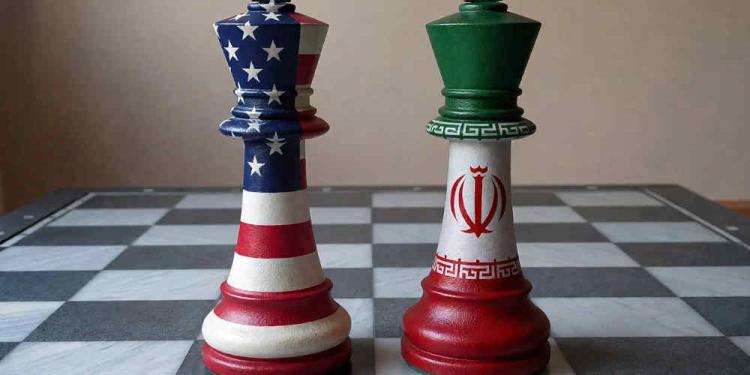
Image source: Pixabay
Should You be Betting on the Iran-US War?
Geopolitics used to feel like something confined to evening news broadcasts and academic panels. But lately, we’ve seen global conflicts shift straight onto live trading screens. The ongoing clashes, naval tensions in the Strait of Hormuz, and economic sanctions between Washington and Tehran have turned geopolitical speculation into a fast-moving asset class. People are no longer just watching history unfold from their living rooms but are actively betting on the Iran-US war on how and when these conflicts will end.
If you’re new to this space, you might wonder how anyone puts a price tag on foreign policy. The truth is simple. While traditional sportsbooks hesitate to touch active wars due to legal and public relations headaches, decentralized prediction markets step right into the void. They price conflict outcomes in real time, acting as both high-stakes wagering platforms and raw intelligence indicators for global events. In this deep dive, we’ll walk you through how betting on the Iran-US war works, break down the possible ways this conflict could end, look at the implied odds, and talk through the thorny ethics behind wagering on human conflict.
Understanding Markets for Betting on the Iran-US War
When you step into this world, you’ll quickly notice that not all platforms operate the same way. The divide comes down to traditional bookmakers versus modern order-book exchanges. If you look at offshore bookmakers, they set fixed odds much like a weekend football game. You might pop onto 1xBet Sportsbook to check sports lines, but finding direct war markets on traditional sportsbooks is rare simply because of heavy regulatory oversight. In contrast, prediction platforms like Polymarket or Kalshi operate on peer-to-peer binary options. You buy “Yes” or “No” shares priced between zero and one dollar. If the market feels an outcome has a forty percent chance of happening, a “Yes” share costs forty cents. If your prediction for betting on the Iran-US war comes true, that share settles at a dollar, giving you a clear payout.
| Feature | Offshore Sportsbooks | Decentralized Prediction Markets | Regulated Derivatives Exchanges |
| Pricing | Fixed Odds with Built-in Vig | Peer-to-Peer Order Books | Order Book Trading |
| Conflict Contracts | Rare Novelty Markets | Active Real-Time Props | Heavily Restricted |
| Settlement Mechanism | Manual Bookmaker Payout | Decentralized Oracles or Smart Contracts | Clearinghouse Settlement |
Tracking online gambling news in the US shows us that regulated domestic sites rarely touch these events. That’s because federal agencies like the CFTC keep a tight leash on outcome contracts involving war or violence. So, traders often head offshore or turn to blockchain platforms to find the latest active markets.
How Contracts Resolve in War Betting
Setting up a market is easy. But settling it gets tricky fast. Geopolitical events don’t end with a clear whistle like a basketball game. Peace treaties are messy, ceasefires get broken within hours, and political leaders rarely sign neat surrender papers. This creates what traders call the “oracle problem.” Platforms rely on specific criteria to resolve contracts. For instance, a market predicting a ceasefire might require an official announcement from the UN or a signed bilateral agreement. If the contract asks whether hostilities will stop, even a single localized drone strike can throw the settlement into dispute.

We’ve seen cases where thousands of dollars hung in the balance while decentralized community voters debated whether a specific event counted as an official military action. So, before you put any money down, reading every line of the resolution rules is an absolute must.
Scenario A and Betting on the Iran-US War
The first major scenario traders watch is a negotiated ceasefire and maritime accord. Given the massive friction in global shipping lanes, international pressure to secure trade routes is intense. A diplomatic breakthrough focused on reopening waterways and lifting partial sanctions remains a top contender for resolving tensions. Right now, market consensus places the implied odds of a formal diplomatic accord in the next six months at around forty-two percent. That makes it the single most likely path according to active traders.
Market prices for this outcome swing wildly based on diplomatic rumors or quotes from official press conferences. When a mediator announces progress, “Yes” shares surge in seconds. But if talks stall, prices drop just as quickly, making this scenario for betting on the Iran-US war a favorite for short-term news traders.
Scenario B and Odds on the Iran-US War
The second outcome when betting on the Iran-US war is a protracted war of attrition coupled with strict economic blockades. In this setting, neither side launches a massive total invasion. Instead, low-intensity strikes, regional proxy engagements, and heavy secondary sanctions become the status quo. Traders currently price the odds of this drawn-out status quo at roughly thirty-five percent. It serves as the baseline expectation for many long-term market participants.
This scenario tends to track closely with global energy markets. When crude oil futures fluctuate or maritime insurance rates spike, traders adjust their positions here. There’s less volatility than a slot machine or diplomatic headline trading, offering a steadier environment for position traders.
Scenario C for Iran-US War Betting
A third, more extreme possibility involves rapid regional escalation or internal regime collapse. This outcome assumes that severe economic pressure and direct military strikes trigger widespread internal destabilization or lead to a much larger global confrontation. The markets treat this as a lower-probability event, pricing it at approximately fifteen percent. Because the odds are low, the potential payouts on “Yes” contracts are much higher, often offering long-shot returns.
Traders often use this market as a financial hedge. So larger investors might buy low-cost shares here to protect their broader investment portfolios against catastrophic market crashes that would follow a major regional escalation.
Scenario D and Odds for Betting on the Iran-US War
The final main scenario covers a unilateral diplomatic pivot or a frozen conflict. This happens if primary military forces simply scale back offensive operations without signing a formal peace treaty, letting the conflict fade into a quiet standoff. Market participants currently give this path the lowest likelihood. In fact, it’s presently sitting at just eight percent implied probability. The biggest challenge with betting this scenario comes down to fine print. You have to check whether the platform defines a pause in strikes as an official end to the conflict. If proxy skirmishes continue, the market may refuse to settle in your favor, leaving your capital locked up for months.
Comparing the Implied Odds
To make sense of how traders see the big picture when betting on the Iran-US war, it helps if we look at all four main scenarios side by side. Market pricing gives us a quick, crowd-sourced snapshot of where the world thinks this conflict is heading next.
- Negotiated Ceasefire: 42% Implied Probability
- Extended Attrition: 35% Implied Probability
- Escalation / Collapse: 15% Implied Probability
- Unilateral Pivot: 8% Implied Probability
Keep in mind that these probabilities aren’t fixed by a central odds maker. They update constantly as hundreds of independent traders buy and sell shares based on fresh news, economic data, and satellite reports.
Insider Trading Risks in Betting on War
One issue you can’t ignore when betting on the Iran-US war in this space is asymmetric information. In regular sports betting, an insider might know an athlete has a hidden injury. But when you look at geopolitical contracts, the stakes are vastly higher. Defense officials, diplomats, and contractors often know about major decisions before the general public does. Recently, we’ve seen plenty of instances on crypto-based prediction platforms where newly created anonymous wallets placed massive trades just hours before major policy shifts or military actions hit the news feed. That leaves regular retail traders at a distinct disadvantage.
Because these decentralized platforms let people trade without traditional identity checks, stopping insider activity is nearly impossible. This creates an uneven playing field where ordinary traders risk getting front-run by people with classified insider knowledge.
Using Prediction Markets as Real-Time Intelligence
Despite those risks, many financial analysts look at war prediction markets as useful tools. The idea relies on the “wisdom of crowds.” When thousands of traders put real money behind their predictions, the market price often reacts faster than traditional news networks or government briefers. In such cases, you’ll see hedge fund managers and supply chain directors keeping an eye on these odds right alongside crude oil charts. The real-time prices offer an unvarnished look at how capital assesses risk.
However, as previously mentioned, these markets are not immune to manipulation. Deep-pocketed actors can buy up large blocks of shares to artificially push odds up or down. They might do this to influence public opinion or create a false narrative. With this in mind, you should never take market odds as absolute truth.
The Ethics of Betting on the Iran-US War
Now, we need to pause and talk about the elephant in the room. Is it morally right to wager on conflict? For many people, placing a trade tied to military operations, political instability, and human suffering feels flat-out wrong. Critics argue that war contracts turn real-world tragedy into a game for entertainment. There is also a theoretical concern called “moral hazard.” If enough money accumulates in a market, could it create perverse incentives for bad actors to influence real-world events just to trigger a payout?
On the flip side, supporters of betting on the Iran-US war argue that these markets perform an essential economic function. They allow businesses, shipping companies, and international workers to hedge against inflation, energy shocks, and supply chain meltdowns. Regardless of where you stand, it’s a heavy ethical question every trader must wrestle with.
How Real-World Businesses Use War Betting
While retail users might jump into these contracts for speculative gains when betting on the Iran-US war, institutional users view them as insurance policies. Think about a commercial shipping company trying to route cargo through dangerous sea lanes. A sudden escalation can skyrocket their operational costs overnight. By purchasing “Yes” shares on an escalation scenario, the shipping company creates a financial buffer or hedge. If conflict breaks out and their business faces delays, their winning market position helps cover the losses.
Individual traders sometimes use the same approach on a smaller scale. If you are worried that rising Middle East tensions will drive up gas prices and spike everyday inflation, holding a small position in conflict prediction contracts can help hedge against those real-world costs.
Regulatory Challenges
If you’re following online sportsbook sites in the US, you’ll know the regulatory climate for sports betting is complicated. Federal law generally prohibits regulated American exchanges from offering contracts tied to violence, war, or unlawful acts. Regulators view these markets as hazardous and outside the scope of legitimate financial trading. This regulatory barrier creates a massive split in the market as regulated platforms like Kalshi must fight uphill legal battles to list event contracts, keeping their offerings strictly monitored and limited.
Meanwhile, offshore operators and decentralized crypto platforms operate largely outside federal jurisdiction. They use self-executing smart contracts and anonymous wallets. This makes it extremely difficult for authorities to shut them down, leaving traders to choose between consumer protections on one side and unrestricted market access to betting on the Iran-US war on the other.
Automated Bots Trading on News about the Iran-US War
If you jump into these markets today, you’re not just trading against other everyday people as you’re also competing against sophisticated automated algorithms. These trading bots are built to scrape news wires, social media updates, and satellite feeds the millisecond they drop. So when an official posts a statement online, an AI bot can process the text, calculate the sentiment, and execute thousands of dollars in trades before a human reader even finishes the headline.
However, take note that this automation can lead to sudden price spikes and quick flash crashes. Keep in mind that a misquoted news report or a fake online post can cause a market to swing wildly for a few minutes until human traders step in to correct the pricing.
Future Geopolitical Betting Contracts on Global Events
As technology evolves, war-related prediction markets like those used with betting on the Iran-US war, are growing more granular as we move past basic questions about whether a conflict will end by a certain date. Platforms are starting to introduce micro-contracts on specific diplomatic sub-events, trade volumes, and energy price thresholds. Eventually, we might see mainstream financial brokers integrate geopolitical risk derivatives directly into standard trading dashboards. The demand for clear risk assessment tools during global crises is simply too high for the financial industry to ignore. At the same time, we’ll likely see traditional gaming operators explore new horizons. Today, you might log into 1xBet Sportsbook to check weekend football odds, but the underlying data models used by prediction platforms are steadily seeping into mainstream risk analysis across the board.
Click here to discover the most various betting markets at the 1xBET Sportsbook


GAMBLING NEWS IN UNITED STATES


2026-10-21

2026-10-21

2026-10-21

2026-10-21

2026-10-20

2026-10-20
