How to Start in Poker Tournaments and Win the Pot
Posted: June 5, 2026
Updated: June 5, 2026
Everyone is a little afraid when they sit down at their first poker tournament. The stakes appear to be very high, and you're unsude of how you'll compare with the other players. Here you can learn how to start in poker with low buy-ins and essential strategies for beginners.
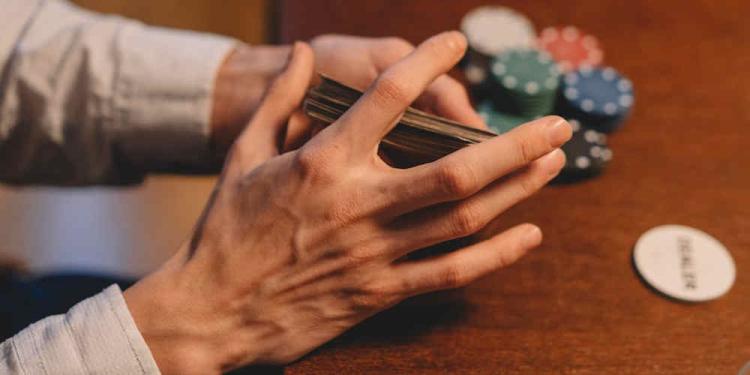
Image source: Pexels
Stepping Into the Arena of Poker Skill and Strategy
Traditional poker is a unique mental battlefield where you sit face-to-face with other human beings who are fighting for their chips. While the dealer is nothing more than a neutral facilitator. You’ll find the game marries short-term luck with long-term skill. As such, it feels incredibly daunting for a newcomer. But the biggest trap for novices is letting adrenaline dictate their actions which can easily lead them to risking hundreds of dollars before they begin to understand table dynamics. To survive and thrive, you must treat your first few months as an educational phase. If you choose to start in poker, keeping your initial buy-ins low. This is the smartest way to protect your wallet while gaining invaluable real-table experience.
Start in Poker by Playing the Player, Not the House
With blackjack or roulette, you’re locked in a mathematical battle against fixed casino house edge. But poker is more about human psychology and decision-making. And all under intense pressure. So you aren’t trying to beat an algorithm or a set of unchangeable house rules. You’re trying to work out the betting patterns, bluffs, and vulnerabilities of the people sitting at your elbows. Now information is the most valuable currency at the table. Keep in mind that every time your opponent checks, bets too quickly, or hesitates before calling, they’re giving you clues about the strength of their cards. If you’re a beginner looking to start in poker, then your first job isn’t just to stare at your own two cards. It’s to observe how everyone else reacts to the community cards.
Start in Poker by Embracing Tight Play
When you sit down at a table for the first time, even at an online platform like 22Bet Casino, you’re going make errors. It’s only natural. For example, you’ll sometimes misread the board or a poker face. Or overvalue a weak pair. Perhaps you’ll fall into obvious traps set by more experienced opponents. Unfortunately, these mistakes are a mandatory part of the learning curve. This means you must ensure they cost you as little as possible. This is why tight play (only playing your absolute premium starting cards) becomes your best shield. Playing tightly means you’ll be folding roughly 80% of the hands you are dealt, and although folding repeatedly can feel boring, it serves a dual purpose. Firstly, it keeps you out of complex, high-risk situations where novices usually lose all their chips. And secondarily, it preserves your cash reserves while you sit back and study how the rest of the table operates.
Utilizing Freerolls and Play-Money Software
Here at Gamingzion, we suggest that before you risk a single dollar of your hard-earned money, you should take full advantage of the digital training grounds available on the internet. “Freerolls” are actual tournaments hosted by online platforms. They cost absolutely nothing to enter. Yet offer real cash prizes or tournament tickets to the top finishers. Freerolls provide an invaluable, stress-free laboratory where you can:
- Get comfortable with the flow and speed of the software.
- See exactly how fast the blind levels escalate over time.
- Experience the change from a crowded tournament field to a short-handed table.
- Practice basic math and pot-equity calculations without any financial pressure.

Navigating “Rookie Nights” at Local Cardrooms
While playing online at casinos like 22Bet Casino, nothing quite matches the visceral thrill of playing live, brick-and-mortar poker. If you want to start in poker with physical cards, then look for casinos that host dedicated “rookie” or “newbie” nights. These events are specifically tailored to strip away the intimidating atmosphere of a standard cardroom. On rookie nights, the dealers are instructed to act as patient instructors. Here they openly explain the rules, pot splits, and etiquette as the game progresses. Best of all, everyone else at the table is in the exact same boat as you.
How to Start in Poker by Understanding the Formats
The moment you walk into a dedicated poker room or log into a gaming site, you’gve got to choose between two entirely different formats. Cash Games (often called ring games) and Tournaments. While they share exactly the same hand rankings, the gameplay execution is completely distinct. So knowing which one to pick is critical when you start in poker. Think of a cash game as an open-ended buffet. Here you sit down whenever you want and buy chips that directly represent real money. At the end of the game you stand up to cash out your profits whenever you please. On the other hand, tournaments are an elimination footrace. You pay a one-time entry fee and receive a standard stack of tournament chips. But you cannot leave with your money until you have either won every single chip in the room or lost your very last one.
Cash vs. Tournaments Compared
To choose the right path for your entry into the game, understand how the mechanics change across both major formats. To help you, we’ve laid out the table below.
| Feature | Cash Poker | Poker Tournaments |
| Chip Value | Direct 1:1 cash value (Real Money) | No cash value: used just for scoring |
| Blind Structures | Permanently fixed at the same level | Escalates automatically at set time intervals |
| Game Duration | Completely fluid: join or leave whenever you want | Fixed: Keeps going until a single winner has all the chips |
| Payout Mechanism | Instant: Keep all the chips in front of you | Top 10% – 15% splits the prize pool |
| Variance/Luck | Low and steady | Extreme, with long dry spells and massive wins |
| Main Objective | Maximize expected value (EV) hand by hand | Survival, chip accumulation, laddering up |
Patience, Deep Stacks, and Real Stakes of Cash Poker
If a chip says £10 on it, then that’s the cost to replace it. It’s this structural reality that makes cash games a test of pure patience. Because there’s no tournament clock ticking down and the blinds never increase, there’s absolutely zero external pressure forcing you to play a hand. So if you want to sit tightly for two hours waiting for Pocket Aces, you can without punishing your stack. However, this format can be a psychological trap. Especially when you decide to start in poker. Because you can instantly reload your stack from your wallet when you lose (“re-buying”), a bad run of cards can result in a massive financial loss in a very short period of time. Even more so if you lack an emotional backbone. This environment is highly prevalent globally. This is why monitoring online casino news in the US and other major regulated markets is highly recommended for both new and old players wanting to stay updated on cash game regulations and consumer safety laws.
The Drama of the Escalating Tournament Clock
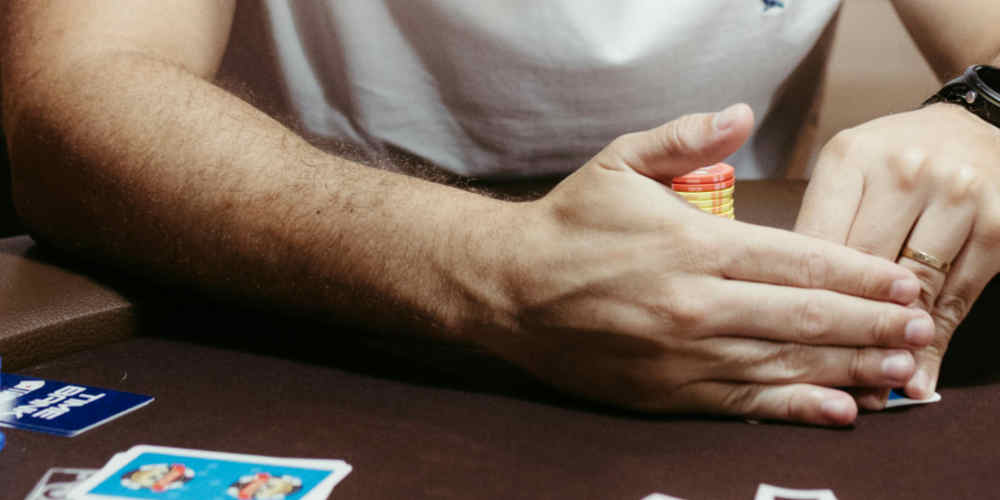
Poker tournaments are designed to generate high-stakes drama. At the start, your buy-in goes into a collective prize pool. Then the casino hands you a mountain of brightly colored chips. While it feels empowering to look at a huge stack, you must remember that these chips are just tools. Remember they have no independent cash value if you walk away from the table.The driving force behind all tournament strategy is the blind clock. Every 15 to 20 minutes in a live game (and much faster online), the forced bets (blinds) increase. To simply sit back and play ultra-passively like a cash game player is a bad idea. This is because the escalating blinds will quickly erode your stack. At that point, you’re forced into a desperation play. Tournaments demand that you change gears and take calculated risks. As you play, you must actively steal chips from your opponents in order to outrun the clock.
Start in Poker by Mastering the “Sit & Go” Format
Maybe you want to dip your toes into tournament dynamics without committing to an eight-hour multi-table marathon. If so, then “Sit & Go” (SNG) games are your perfect stepping stone. These are single-table micro-tournaments. They begin the exact moment all the seats (usually 6 to 9 players) are filled. Sit & Gos are an exceptional poker training tool. That’s because they compress the entire tournament experience into a tight, one-hour window. So in a single session, you will gain firsthand experience playing:
- Full-handed poker during the cautious early stage.
- Short-handed poker when players start busting out.
- High-tension “money bubble” where one more elimination guarantees a payout.
- Heads-up poker is the final, aggressive one-on-one battle for the title.
If you choose to start in poker through Sit & Gos, you’ll rapidly develop the foundational skills needed for larger events.
The Mathematics of Risk, Variance, and Bankroll Management
In poker terminology, “variance” is the scientific phrase for short-term statistical luck. Due to variance, you can calculate the odds perfectly and get your money into the pot with the best possible hand. Yet still lose to an opponent who hits a lucky card on the river. This reality means that protecting your poker capital through structured poker bankroll management is critical. Because tournaments have top-heavy payout structures, where you will completely miss the money roughly 85% of the time, you need a substantial financial cushion to absorb long losing streaks.
- The Beginner’s Golden Rule: Never enter a tournament unless your dedicated poker bankroll contains a minimum of 50 buy-ins for that specific stake level.
In other words, if you want to play $10 tournaments, you need a separate poker bankroll of $500. This buffer ensures that a string of ten consecutive losses won’t devastate your finances. Or impact your emotional well-being for that matter. It’s the best way to safely start in poker.
Basic Tournament Strategy to Start in Poker Phases
A tournament is a shifting landscape where you must adapt your strategic style across three distinct phases:
- The Early Phase: The blinds are tiny compared to your starting stack. There is no reason to risk your chips in marginal spots. Sit tight and play premium cards. Let the overly aggressive players eliminate each other.
- The Middle Phase: The blinds are now large enough to hurt. So you must shift gears into a more aggressive style. Initiate pots with raises rather than passive calls. Actively targeting vulnerable opponents.
- The Late Phase: The stacks are shallow and the pressure is immense. Survival play will ruin you. Now you must look at your opponents to make bad decisions for all their chips.
Start in Poker by Identifying Common Beginner Mistakes
The fastest way to improve your win rate is to eliminate the glaring beginner mistakes. The most destructive habit of new players is “limping.” This involves simply calling the minimum blind amount to see a cheap flop rather than entering the pot with a confident raise. Limping signals weakness to the table. Furthermore, it relinquishes control of the betting narrative. As such, it forces you to play multi-way pots where your hand strength is heavily diluted. Another massive vulnerability is completely ignoring table position. Playing a hand when you are “out of position” (meaning you are forced to act first on every betting round) is a huge strategic disadvantage. You should play incredibly tight when acting early. Then slowly expand your aggression when you are sitting near or on the dealer button as this will allow you to see how everyone else reacts before you make your move.

The “Bubble” Phase of Turning Fear Into a Weapon
The “bubble” is the exact point in a tournament where the next player eliminated walks away with nothing. While every surviving player secures a minimum cash payout. For beginners, the bubble is a terrifying wall. Amateurs freeze up completely. They end up folding solid hands because they are paralyzed by the fear of busting out just short of the money. As a savvy beginner, you must learn to see this fear as your greatest weapon. Instead of retreating, this is the exact moment to step on the gas. Look for the tight, terrified stacks and any tells. Those who are trying to blind their way into the money, and aggressively raise their blinds. By exploiting their passivity, you can easily accumulate a massive mountain of chips.
Your Definitive Strategic Roadmap to Start in Poker
Stepping into the world of poker at top online casino sites in the US, never let yourself be intimidated by the seasoned looks of your opponents. Remember that every elite professional sitting at a final table started exactly where you did. Prioritize structured tournament formats over volatile cash games. Also maintain an unyielding 50 buy-in bankroll cushion. By employing an aggressive, disciplined pre-flop strategy, you can close the experience gap of your competitors. The choice to start in poker requires patience and resilience. You must have a willingness to always be analyzing your own gameplay. Start small and stay observant. Embrace the mathematical learning curve. And remember to manage your bankroll first and your cards second. Your seat at the table is waiting.
Click here to play poker variations at the 22BET CasinO


GAMBLING NEWS IN UNITED STATES


2026-10-22

2026-10-22

2026-10-22

2026-10-22

2026-10-21

2026-10-21
