Ancient Gambling Fragments: What Was Chance In Mythology?
Posted: August 14, 2026
Updated: August 14, 2026
-
Everything a gambler can take away from superstitious history
-
What remained from gambling mythology?
-
Ancient gambling fragments
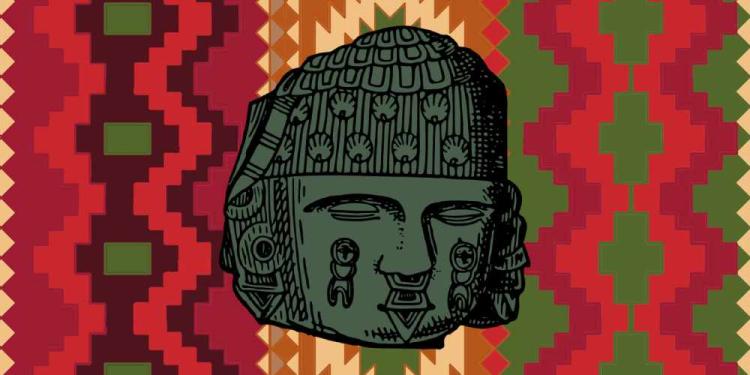
The seeds of superstition started in ancient cultures, and it only grew and cultivated. The ancient gambling fragments still exist in the Las Vegas casino halls, every time a gambler blows air on the dice before the throw.
Long before any country decided whether betting was a vice or a tax base, somebody had to decide what a rolled bone actually was. And nobody, anywhere, ever answered “nothing.” That answer took us until roughly the seventeenth century to invent. So I went looking for the pieces. Not full mythologies, because full mythologies are tidy and dishonest.
I wanted the ancient gambling fragments: a line in a Roman ethnography, a drilled bean, a twenty-sided lump of stone in a desert museum, a hymn about a man who lost his wife to a nut. Laid side by side, they sort themselves into six categories, and the categories are the interesting part. Humanity kept arriving at the same six answers independently, on different continents, without comparing notes. Register at any of the online casino sites in the Philippines to find the best sites to play games!
Chance As A God: Ancient Gambling Fragments
Chance as a God itself is likely the most common example. It was present in Aztec culture, where the spirit of the crowd became the God itself they worshiped. Alternatively, there are many “Gods of Fortune” in many different cultures, mythologies, and religions.
Macuilxochitl
Culture: Aztec
His name means Five Flower, and he is the patron of games, gambling, music, dance, and feasting. What makes him worth pausing on is his job description. Macuilxochitl belongs to the Ahuiateteo, a group of five deities born out of pleasure taken past its limit. Sahagún’s informants describe him rewarding the players who honoured him and afflicting the ones who overdid it, with boils, haemorrhoids and venereal disease. Read that structure again. The Aztecs did not split luck and consequence between two gods. The same figure who blesses your throw is the one who collects when you cannot stop throwing. That is a responsible gambling framework encoded as theology, roughly five centuries before anyone printed a helpline number on a betting slip.
Tyche
Culture: Hellenistic
Tyche gets promoted at a very specific moment in history. She exists earlier, but she becomes enormous after Alexander dies and the map starts redrawing itself every few years. When the world stops feeling governed, people need a name for the thing governing it instead. Her attributes are a confession: a rudder, because she steers, a cornucopia, because she pours out, and sometimes a ball or a wheel, because nothing she stands on holds still. Cities commissioned their own personal Tyche, most famously Eutychides’ Tyche of Antioch, seated on a rock in a crown shaped like city walls. Polybius, writing history, complained that his colleagues invoked her every time they could not explain a result. So the ancient world also had people annoyed at other people for blaming variance. Register at Yukon Gold Casino and play online today!
Chance As Divine Communication
The ancient gambling fragments show themselves in various ways. So, what is a prayer, sacrifice, and ritual? Essentially, most cultures didn’t think they could scream to a God for their words to be heard. And thus, rituals are the communication towards the divine. Many people believe that through objects and fetishes, they can communicate with or evoke the divine.
Germanic Lots
Culture: German
Tacitus describes the procedure in chapter ten of the Germania, and it reads like a rulebook. A branch is cut from a nut-bearing tree and sliced into strips. Each strip gets a mark. The strips are scattered at random onto a white cloth. Then a priest, for public questions, or the head of the household, for private ones, says a prayer, looks up at the sky rather than down at the wood, and lifts three pieces. He reads them, and that is the answer.
The detail I keep coming back to is the next line. If the lots come back unfavourable, there is no second consultation on the same question that day. They built a stop-loss into their divination. You get one no, and the no stands until tomorrow. Our word “lot”, and by extension “lottery”, walks straight out of this practice.
I Ching’s Yarrow-stalk
Culture: Chinese
The yarrow method takes fifty stalks. One is set aside immediately and never used again, which is already a strange and beautiful piece of design. The remaining forty-nine get divided, counted off in fours, and set aside across three rounds, and each completed round produces one line. Six lines, eighteen manipulations, one hexagram. It takes a while, and that is the point.
Here is the nerdy bit worth knowing. The yarrow method and the faster three-coin method do not produce the same odds. With yarrow, a changing yang line comes up roughly three times as often as a changing yin line. With coins, they are equally likely. So the older, slower method has an asymmetry baked into it about which direction the world prefers to move. According to Reddit, people still use the method, and everyone has their own interpretation. From giving you more time to having a ceremonial aspect that turns the mundane into sacred.
Click here to try the live casino at Yukon Gold Casino!
Chance As An Offering: Ancient Gambling Fragments
And sometimes, the divine needs a vessel to embody within. These are objects we either sacrifice to gain a favor, or objects the divine spirit can possess to manifest in the physical realm.
Patolli’s Share
Culture: Aztec
Patolli is played on a cross-shaped mat with fifty-two squares, matching the fifty-two-year calendar round, which tells you the board was never only a board. The randomiser is five black beans drilled with a hole on one face. You throw them and count how many marked sides land up.
The part that belongs in this section is what happens before the first throw. Durán and Sahagún describe players carrying their beans in a pouch, speaking to them, calling on Macuilxochitl by name, and burning incense or setting out food for him before anyone wagered anything. The offering came first. Not a thanksgiving after a win, but a retainer paid up front to the player nobody could see. And the stakes were real: blankets, jade, feathers, gold, houses, and in the worst cases the player’s own freedom.
A Seat For Lady Luck: Ancient Gambling Fragments
Culture: Norse
The way Vikings used to gamble is fascinating. They used to leave a chair for Lofn, the Goddess of Chance. See, this is essentially offering an instrument for her to be present, and it is hard to over-explain. Such a simple, yet powerful gesture.
Think about it for a moment: What if we decided in today’s world that each time we reach the WSOP finals, one chair must be empty for the Goddess of Gambling? Whether you are a theist or not, it is a powerful concept, and it can immediately elevate the mood and perhaps help avoid getting personal feelings against each other.
Chance As A Supernatural Object
And of course, there are physical ancient gambling fragments. And as we have sacred objects, it also implies objects can be imbued with divine essence to become the vessel of fortune, or the indicator of it.
Dakhleh Oasis: God Dice
Culture: Egypt
In the 1980s, at Qaret el-Muzzawaqa in the Dakhleh Oasis, excavators pulled out a twenty-sided die. It is now in the New Valley Museum at Kharga and dates to somewhere around the first century AD. Icosahedral dice are not rare from Graeco-Roman Egypt. What makes this one singular is that the faces do not carry numbers or Greek letters. Each of the twenty faces carries the name of a god, written in Demotic.
Sit with the implications. This object cannot score a game. There is no arithmetic to do with it. You throw it to find out which member of the pantheon is handling your case. A Greek geometric form, filled with Egyptian content, doing a job neither tradition invented alone. The oldest surviving twenty-sided die on record is not a toy. Because it is a switchboard.
Greek Astragalomancy
Culture: Hellenistic
Astragali are the ankle bones of sheep and goats, and they land on four usable faces, conventionally scored 1, 3, 4, and 6. The two missing numbers are missing because the bone physically cannot rest that way, and the four faces it does use are not equally likely. Throw five of them, and you get a combination, and combinations have names.
The best was the Aphrodite throw, all five different. However, the worst was the dog. In parts of Asia Minor, whole inscribed pillars survive listing throw combinations against verse answers, each answer signed by a god. According to the Museum of Cambridge, there are few records on how it was played, but it is definitely certain that this was both a game and a divination method.
Click here to try the live casino at Yukon Gold Casino!
Chance As Destiny: Ancient Gambling Fragments
This category is the subtle one, and I think it is the most psychologically brutal. Here, chance is not deciding anything. The outcome was already fixed, and the dice are only the delivery mechanism. The throw is not the author of your result. It is the messenger reading out a text that was written before you sat down. Which means you cannot appeal it, and you cannot really claim credit for it either. But in some cultures, you can definitely change the trajectory.
Örlög: Ancient Gambling Fragments
Culture: Norse
According to the Troth, Örlög (Ørlǫg) was fate itself, the word made up from “divine law” and “original layer,” referring to all sorts of things that can change the trajectory of our lives. Essentially, Norse believed that throwing a dice itself can be random. However, the portion of randomness was already distributed to us.
Darius’s Horse: Ancient Gambling Fragments
Culture: Persian
Herodotus tells this one in book three, and it is my favourite piece of political machinery in the ancient world. Seven conspirators have just killed the usurper and now have to decide which of them rules Persia. They do not fight. They agree on a procedure: ride out to the edge of the city at dawn, and whoever’s horse neighs first after sunrise takes the throne.
Darius’s groom, Oebares, rigged it. He took the stallion to that exact spot the night before, let him mate with a mare there, and in the morning carried the scent on his hand. The horse neighed on cue. Then thunder and lightning came out of a clear sky, and the other six dismounted and prostrated themselves. That is the crucial detail. The result was fixed, and everyone treated it as destiny anyway, because the sky co-signed it.
Chance As A Dangerous Power
Finally, ethical teachings remain the strongest ancient gambling fragments. The warnings sit inside the scripture, next to the rituals, written by the same people. Humanity worked out that this thing was dangerous roughly at the same time it worked out that it was holy.
Rigveda 10.34
Culture: India
The Gambler’s Lament is about three thousand years old, and it is, functionally, the first addiction memoir we have. The dice are not carved cubes. They are the brown nuts of the vibhidaka tree, and the gambler describes them as born in a windy place, rolling on the board, cold to the touch but burning him anyway.
Then it gets specific in the way only firsthand accounts get specific. His wife pushes him away when he comes home. His mother-in-law hates him. He goes looking for someone to lend him something and finds nobody. He knows the dice have hooks in them and he goes back to the board regardless, because, in his words, he heads toward them like a lover to a meeting place. The hymn closes with Savitr’s instruction, which is not a curse or a condemnation. It is practical advice: stop playing, work your field, be satisfied with what you own; your cattle are there and so is your wife.
Ryōjin Hishō
Culture: Japanese Zen
Before the monk who won the lottery and gave it all away, we had tales, such as the Ryōjin Hishō. Here, a gambler is asking Kami for protection and even lucky numbers. The collection itself is an odd artefact. Cloistered Emperor Go-Shirakawa compiled it around 1179, and he was not slumming it for a season. He apprenticed himself for decades to Otomae, an aging female entertainer from a class the court barely acknowledged existed, because he wanted the imayō sung correctly.
A mother is speaking. Her son must be about twenty by now, and word has reached her that he is going from province to province, gambling. She says he is her child regardless, so what she feels is a mixture of resentment and grief. And then she prays. Not for him to come home, not for him to stop. She asks the kami of Sumiyoshi and Nishinomiya to make sure he does not lose. Register at Yukon Gold Casino and test your luck today!
Click here to try the live casino at Yukon Gold Casino!


GAMBLING NEWS IN UNITED STATES


2026-09-28

2026-09-28

2026-09-25

2026-09-25

2026-09-25

2026-09-25
