Learn the Differences Between European and French Roulette
Posted: December 30, 2025
Updated: January 1, 2026
-
The differences between European and French Roulette mainly affect house edge and player odds.
-
French Roulette offers La Partage and En Prison rules that reduce losses on even-money bets.
-
European Roulette is simpler and more widely available at online casinos.
-
Choosing between European and French Roulette depends on experience level and risk preference.

Image source: Pixabay
We’re guessing that nearly every casino around the world will have roulette among its games. No matter whether you’re playing online at Bet365 Casino or trying your luck at a land-based casino in the UK or Canada. In truth, it’s one of the most exciting games in the establishment. The wheel spins, the tiny ivory ball bounces around, and you find yourself holding your breath as it lands on a number. It’s certainly both thrilling and immersive. However, if you’re new to the game, you might be wondering about the differences between European and French roulette. While both games look pretty similar at first glance, they actually have some pretty key differences that can make a real impact on your game.
If you’re a roulette newbie who’s just starting out, understanding these differences will help you make more informed choices when you’re playing at places like HellSpin Casino. So, let’s break it down together with our online casino games guide.
To start with, here’s a table summarizing the key differences between European and French Roulette:
| Feature | European Roulette | French Roulette |
| Wheel layout | 37 slots (numbers 1-36 + 1 zero) | 37 slots (numbers 1-36 + 1 zero) |
| Wheel Numbering | Standard order of numbers | Different order; includes French terminology (e.g., “Impair” for odd numbers) |
| House Edge | 2.7% | 1.35% (with La Partage or En Prison) |
| La Partage Rule | Not available | Available (half of even-money bets returned if zero is hit) |
| En Prison Rule | Not available | Available (even-money bets “in prison” if zero hits, and can be won back on the next spin) |
| Betting Options | Standard inside and outside bets | Includes special bets like Voisins du Zero, Tiers du Cylindre, and Orphelins |
| Table Layout | Simple layout with basic labels | Includes additional French labels for special bets (e.g., “Impairs/Pair” for odd/even) |
| Bet Terminology | English terminology (Red/Black, Odd/Even) | French terminology (Rouge/Noir, Pair/Impair) |
| Special Bets | No special section bets | Special bets (Voisins du Zéro, Tiers du Cylindre, Orphelins) available |
| Payouts | Same as French Roulette | Same as European Roulette, but better odds with La Partage or En Prison rules |
| Available at Online Casinos | More common | Less common |
| Complexity | Simpler, better for beginners | Slightly more complex due to extra rules and terminology |
The Origins of European and French Roulette
Before we get into the nitty-gritty of the main differences between European and French roulette, let’s take a quick trip back in time. European Roulette has its roots in the 18th century. But French Roulette was the original version and the game is credited to French inventor Blaise Pascal. However, it was in Europe where the game really took off and evolved into what we know today. So the French version came first and spread across Europe, influencing other versions in its wake. When you’re comparing the difference between European and French roulette, in many ways you’re really looking at two sides of the same coin, with French Roulette being the original classic.
The Roulette Wheel: Key Differences in Layout
As every roulette lover will tell you, the roulette wheel is where the magic happens. In European Roulette, there are 37 slots. These are the numbers 1 through 36, plus a single green zero. Which is pretty straightforward. Now, when it comes to French Roulette, you’ll also find the same 37 slots. But in this case, the layout is a bit different. The numbers are arranged in a slightly different order. It’s also common to see French terminology on the wheel, such as “Impair” for odd numbers and “Pair” for even ones. Though on the face of it, it’s not a huge deal, there’s definitely a noticeable difference between the two versions.

Differences Between European and French Roulette: The Numbering System
Here’s where things get interesting. Probably one of the biggest differences between European and French roulette shows up in how the numbers are laid out on the wheel. Although both games have the same numbers, they’re placed in a slightly different order. You’ll quickly spot that the order on the French wheel is a bit more ‘traditional’ to the original design. However, this has pretty much zero effect on the game, and you won’t notice anything different when you’re playing. Some players are more drawn to casino games where a certain amount of strategy is involved, as opposed to relying purely on luck. Perhaps you’re the kind of player who likes to stick to a strategy based on number patterns or layouts. In this case, the difference in the wheel order could be something to consider. But for the vast majority of casual players, it’s a small difference that doesn’t make a huge impact on gameplay.
The House Edge: A Critical Comparison
Here we come to what’s probably another of the most important differences between European and French roulette. As a casino player, you’re already familiar with the term “house edge.” At its most basic, this is the casino’s built-in advantage over every player. As it’s baked into every game, it’s inescapable. When it comes to European Roulette, the house edge hovers around 2.7%. That means for every $100 you bet, on average, you’ll lose about $2.70 over time. Not a terrible number, but it does add up as time passes. Now, here’s the kicker for French Roulette. If you’re playing at an online casino that uses the La Partage or En Prison rules, then your house edge is cut in half to about 1.35%. That’s a huge difference. In truth, it’ll give you a much better shot at winning. So, if you’re trying to get more bang for your buck, we strongly suggest that French Roulette might be the way to go.
The “La Partage” Rule: How It Affects French Roulette
Speaking of the La Partage rule, look at it in little more detail. Now, imagine you’re playing French Roulette with a live dealer at HellSpin Casino and you place a bet on an even-money wager (like red or black), and the ball lands on zero. This is when the La Partage rule kicks in. Instead of losing your entire bet, you get half of it back, which is a pretty cool feature. Keep in mind that this rule doesn’t exist in European Roulette. So if you’re playing this version of roulette, you’ll lose your bet completely if the ball lands on zero. In other words, La Partage offers a little bit of a cushion if you’re unlucky enough to hit zero. As such, it tilts the French game slightly in your advantage.
The “En Prison” Rule: Another Advantage of French Roulette
Another rule that French Roulette has in its pocket is “En Prison.” With this, even if your even-money bet lands on zero, instead of losing it entirely, the bet is “in prison” for the next spin. If you win the next spin, you get your bet back. If not, well, you lose it. To be honest, we found this rule to be a game-changer. This is especially true if you play a lot of even-money bets. After all, it gives you a second chance without the full sting of a loss. It’s definitely one of the major perks of French Roulette. Once again, it’s something you won’t get with European Roulette.
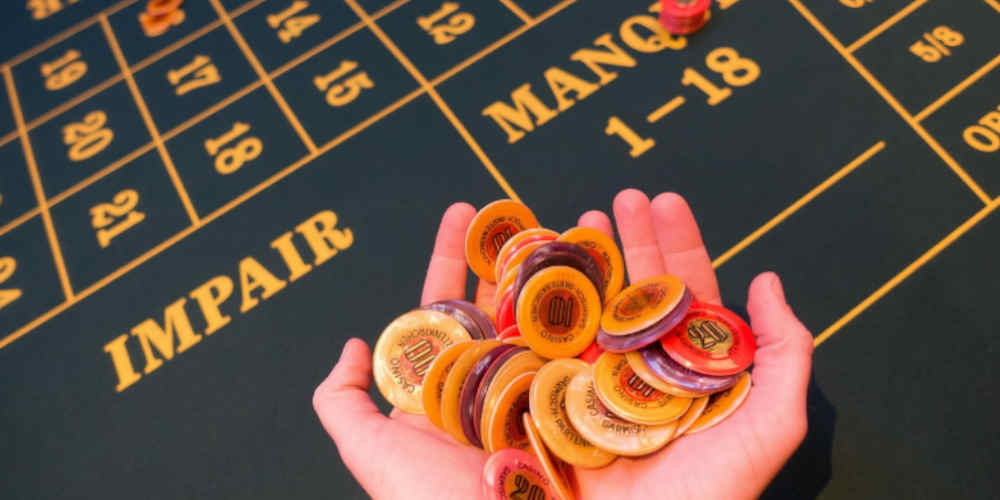
Betting Options: Are There Differences?
When it comes to roulette betting options, the main differences between European and French roulette are the special bets. In French Roulette, you’ll find many more options like Voisins du Zero, Tiers du Cylindre, and Orphelins. These are group bets that cover specific sections of the wheel. Unfortunately they aren’t available in European Roulette, where you only have access to inside and outside bets. Now, it’s important that you don’t let these special bets overwhelm you. Remember that they’re not necessary to enjoy the game. But at the end of the day, they do give you a bit more variety and can add some excitement to your strategy.
Differences Between European and French Roulette: Inside vs. Outside Bets
Whether you’re playing at a brick-and-mortar casino or online at 1xBet Casino, you’ll find the usual inside and outside bets in both versions of roulette. Inside bets are placed on specific numbers. On the other hand, outside bets cover larger groups like red or black, odd or even. There’s no real difference between the two versions of roulette when it comes to these bets. However, the house edge (remember that 2.7% vs. 1.35%) will have a huge effect on your chances of winning, especially if you’re betting on the outside options. These wagers are more common for casual players.
The Table Layout: Differences in Design and Terminology
On top of the wheel differences, the tables for European and French roulette also have some design variations. French Roulette tables often include extra labels that help with the special bets we mentioned earlier. For example, you’ll see things like “Impairs” and “Pairs” right on the table. This can help if you’re still learning the ropes of French roulette. Newbie players will find European Roulette tables are simpler. They feature more straightforward labels like “Red/Black” and “Odd/Even.” For a beginner, this can feel a bit easier to get into, as the French layout might seem more complicated at first glance.
Differences Between European and French Roulette: Special Bets
As I mentioned earlier, French Roulette comes loaded with some exciting special bets that you won’t find in European Roulette. These wagers let you cover independent and select sections of the wheel. Or you can choose a set of numbers that are grouped together. It’s a nice way to mix things up and add some variety and excitement to your gameplay. On the flip side, if you’re just looking for a traditional basic table game, then European Roulette might be a better option. After all, with this you don’t have to worry about learning the ins and outs of extra bets. You can just focus on the classic inside and outside wagers. Furthermore, there are no French language terms to remember.

Strategies: Does the Difference in Rules Change Strategy?
You might be wondering, “How do the differences between European and French roulette affect my strategy?” Well, the short answer is that it depends on a number of different factors. For example, if you’re playing European Roulette, you might want to stick to the usual inside and outside bets. Probably your main focus with this version of roulette should be on managing your bankroll. However, with a house edge of 2.7%, it means you’re not going to have the same advantage as you would at the French Roulette table. On the other hand, if you’re playing French Roulette, the La Partage and En Prison rules give you a bit more breathing room. Your strategy might include more even-money bets. That’s because, with these, you have a better chance of getting some of your money back if the ball lands on zero.
Differences Between European and French Roulette: Which is More Player-Friendly?
The whole gameplay experience really comes down to what kind of player you are. If you’re the type who wants something simple and straightforward, then European Roulette should be your go-to version of roulette. With this game, you won’t have to deal with any extra rules or terminology. Just spin the wheel, place your bets, and have fun. French Roulette is for players who are a bit more sophisticated. In other words, players who enjoy a bit more depth and strategy. The extra rules like La Partage and En Prison make it a more favorable option, especially if you’re trying to stretch your bankroll a bit further.

Pros and Cons: European vs French Roulette
Here are the main factors that illustrate the differences between European and French Roulette
European Roulette
Pros
- Simple and easy to understand.
- Fast-paced and straightforward gameplay.
- More widely available at online casino sites in Canada like Bet365 Casino.
Cons
- Higher house edge (2.7%).
- Fewer betting options compared to French Roulette.
French Roulette
Pros
- Lower house edge (1.35% with La Partage and En Prison).
- More betting options with special bets.
- A more forgiving game for players who make even-money bets.
Cons
- The table and rules might feel a bit more complicated to newcomers.
- Slightly more niche; not all online casinos offer it.
Differences Between European and French Roulette: Which Version to Choose?
So, what’s our final verdict on the differences between European and French roulette? If you’re a beginner or a player who’s just looking for a fast, no-fuss game, then European Roulette is a solid choice. This is thanks to its simple and straightforward gameplay. Furthermore, whether you’re in Canada or the UK, it’s easy to find across the majority of top online casinos like 1xBet Casino and HellSpin Casino. However, it’s a different story if you want to take your game to the next level. Providing you’re comfortable with a few more rules, French Roulette might be the way to go. Featuring a lower house edge, plus the added options with La Partage and En Prison, it makes this version of roulette a game to be enjoyed at a more strategic level. Yes, there are some extra terms and betting options to learn. But all this will lead to even greater fun and hopefully, greater rewards.
Check out different Roulette options at bet365


GAMBLING NEWS IN UNITED STATES


2026-09-25

2026-09-25

2026-09-25

2026-09-25

2026-09-25

2026-09-24
