Painters Who Loved Gambling – Preserving The Table Momentum
Posted: September 16, 2025
Updated: September 16, 2025
Painters who loved gambling turned risk into inspiration and chaos into art. Their stories show how the thrill of chance shaped their creative genius.
Painters who loved gambling turned risk into inspiration and chaos into art. Their stories show how the thrill of chance shaped their creative genius.
Click Here To Register at Wild Casino!
Painters who loved gambling lived where art and risk collide. Because they thrived on tension, gambling sparked their creative fires. Therefore, their brushes danced to the same rhythm as spinning roulette wheels. These artists reveal how chasing chance shaped masterpieces and wrecked lives alike.
They thrived on tension, both on canvas and at gambling tables. Because gambling mirrored the highs and lows of art, it fascinated them deeply. However, this passion sometimes consumed them more than their paintings ever could. Their creativity danced with risk, which shaped their legacies in unexpected ways. Register at any of the online casino sites in the US to try gambling games yourself!
Paul Cézanne – Painters Who Loved Gambling
Paul Cézanne remains one of the quiet giants of art history. However, his quiet nature hid a deep fascination with the thrill of cards. According to Housing Art, his most expensive painting is “Card Players”. Cézanne often sought structure while living in chaos. He worked tirelessly to control light and shape in his art. However, gambling gave him a rare escape from his rigid discipline. Cards offered a fleeting taste of disorder, something his art resisted. Thus, the card table became his counterpoint to endless hours of perfectionist painting.
He watched faces for flickers of emotion, then brought that tension to canvas. Because Cézanne loved studying human behavior, gambling thrilled him even more. Each gesture revealed secrets he could never paint in still fruit bowls. Each bluff showed more than any posed portrait ever could. Therefore, gambling gave him a rawness that sharpened his art. It also fed his belief that life could collapse in a single move. Register at Wild Casino and try some traditional games!
Edvard Munch
A household name among the painters who loved gambling. Munch is the first person most art school students learn about. Thus, we consider him to be among the historic figures who gambled. Edvard Munch painted pain like few others could. His work screamed with emotion, yet he sought even louder thrills. Munch battled depression, anxiety, and relentless self-doubt. However, gambling gave him short bursts of euphoria he couldn’t find elsewhere. The tension of risk muted the roar inside his mind. He once lost huge sums in a single night, yet returned for more. Therefore, gambling became his dangerous balm, numbing pain while feeding his obsession.
His paintings reflect this reckless hunger. In “The Scream,” waves crash around a silent cry. The figure’s terror mirrors the panic of sudden loss. Munch knew that vertigo well from nights at gaming halls. Because he lived on emotional cliffs, gambling fit his spirit like a glove. He also surrounded himself with decadent circles in bohemian Berlin. There, wine, art, and cards blurred together under a gaslit haze. Munch often painted in the day, then gambled deep into the night. That rhythm shaped his art’s wild energy and unsteady beauty. However, it also worsened his instability, pushing him toward breakdowns.
Click Here To Register at Wild Casino!
Pablo Picasso – Painters Who Loved Gambling
Pablo Picasso bent reality like few minds ever dared. However, even his fierce genius sought chaos beyond the studio. He found that chaos in gambling’s whirl. Not only a part of this list, but also among the influential thinkers who gambled, Picasso lived on the risk. Because he thrived on disruption, gambling matched his restless spirit. Not only a part of this list, but also among the influential thinkers who gambled. He often hosted gambling parties in smoky Paris salons. There, poets and painters wagered as wild ideas clashed in laughter.
Picasso bet aggressively, charming or intimidating opponents with sharp confidence. Because he read people like sketches, he excelled at bluffing them blind. That same insight carved faces into cubes and fractured worlds on canvas. However, gambling was more than a sport to him. It echoed his artistic creed: destroy to create. Each lost bet felt like smashing a canvas to build anew. Therefore, gambling fed the daring that shaped Cubism’s bold break from tradition. The risk of ruin thrilled him as much as reinventing art itself.
Henri de Toulouse-Lautrec
Next one on our list for the painters who loved gambling is one who painted moments of secrets. Henri de Toulouse-Lautrec painted Parisian nightlife like a secret diary. However, beneath his glittering posters and cabaret scenes beat a gambler’s heart. He adored games of chance almost as much as dancers and wine. Many of his drawings remind us of the former U.S. presidents who gambled. Because he lived with chronic pain and disability, gambling gave him escape. He stood barely five feet tall, his legs disabled by childhood injuries.
Society mocked him, yet the gaming table treated him as an equal. There, status vanished. Only nerve and wit decided victory. Thus, gambling offered him the freedom he found nowhere else. He haunted Montmartre’s smoky rooms after painting all day. Cards slapped tables while absinthe stained the hours green. Toulouse-Lautrec bet boldly, laughing even when he lost the entire week’s earnings. That reckless glee bled into his art’s dizzy movement and flashing color. Because gambling freed his spirit, it sharpened his creative daring.
Click Here To Register at Wild Casino!
Caravaggio – Painters Who Loved Gambling
Caravaggio painted drama like thunder crashing through a chapel. According to FAD Magazine, Caravaggio captured nobles playing card games. He is known as one of the biggest names on this list. He roamed Rome’s taverns when not painting for wealthy patrons. There, dice clattered like drums while tempers sparked into fights. Caravaggio often joined both games and brawls with fearless abandon. His temper was infamous, and gambling only sharpened it. However, that danger also charged his paintings with electric tension. In “The Cardsharps,” he showed two cheats conspiring while their victim plays on.
The boy’s innocence glows while shadows coil around the tricksters’ hands. Because Caravaggio understood deception, he painted its beauty and menace perfectly. He made gambling into a moral battlefield between light and dark. His chiaroscuro style echoed gambling’s sudden swings. Light blazed like sudden fortune, then plunged into consuming shadow. He loved this clash of extremes, both on canvas and in life. Therefore, gambling was not just a leisure activity for him but a mirror of fate.
Cassius Marcellus Coolidge
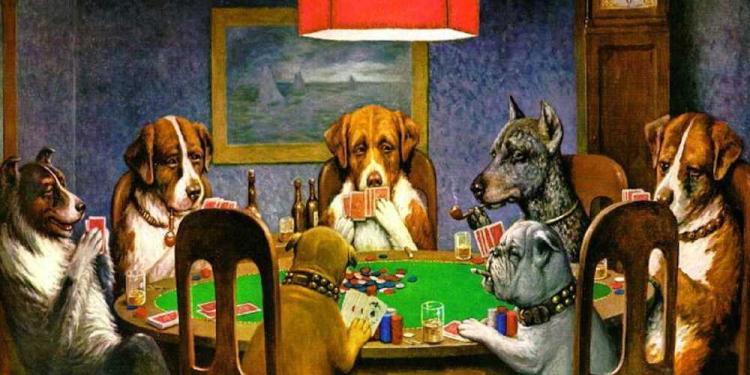
Finally, the most famous among the painters loved gambling. Cassius Marcellus Coolidge may seem lighter than these tormented masters. However, his gambling ties are iconic in a different way. According to Art Stage: Singapore, Cassisu made the famous painting in which the dogs sit around the poker table. Coolidge approached gambling with humor instead of despair. Because he lived in small-town America, he viewed card games as camaraderie. His dogs bluff, grin, and sip cigars like old drinking buddies. He made gambling warm and absurd instead of dark or tragic.
Thus, he reshaped its image into cheerful nostalgia. He started as a sign painter, then turned to comic scenes. Gambling offered him endless inspiration for these playful tableaus. He captured the table’s tension without its pain, making viewers smile instead. That lighthearted charm spread fast across saloons and homes. Because his dogs humanized gambling, they softened its moral sting. Even skeptics chuckled at bulldogs scheming over royal flushes. His art became decoration for bars and rec rooms nationwide. Register at Wild Casino and try games yourself!


